The Climbdown Lexicon: How to Translate a Minister's 'I've Listened'
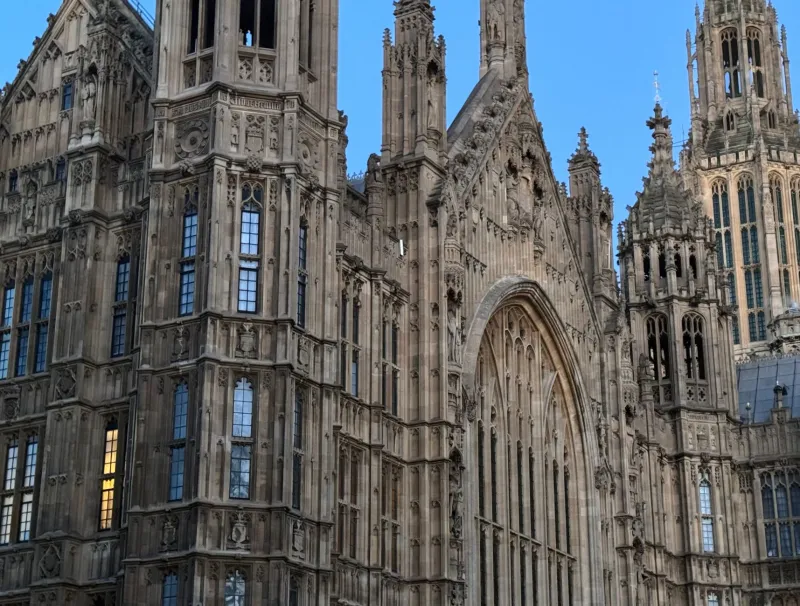
Westminster has a rich tradition of the non-apology. It is a delicate art, practised by ministers who have discovered that the policy they defended on Monday is no longer government policy on Wednesday, and who would rather eat a copy of Hansard than use the word ‘U-turn’. The result is a lexicon of evasion so polished that it deserves its own Olympic category: synchronised climbdown.
The rules are simple. Never admit the policy was wrong. Never admit you were wrong. Never admit there was a policy. Instead, explain that you have ‘listened’, that the matter was ‘operational’, that your intentions were ‘honourable’, and that the government has ‘evolved’. If pressed, blame the civil service, the media, the previous minister, or ‘the implementation’. If still pressed, announce a review.
Here, then, is a field guide to the language of the climbdown – and a serious note on what accountability should look like when the select committee finally gets its turn.
The lexicon, translated
‘I have listened’
Translation: I have heard you, and I will now do the opposite, but slowly, and with a statement that makes it sound like your idea. This is the gold standard of the non-apology. It suggests humility without conceding error. It implies the minister has been on a listening tour, when in fact they have been on a polling tour.
What it tells us: the minister has lost the internal argument, or is buying time until the news cycle moves on. It is often followed by ‘and that is why we are announcing a review’, which is the political equivalent of putting a ‘back in five minutes’ sign on a broken policy.
What a select committee should ask: Who did you listen to? When? What did they say? Will you publish the submissions? And if you listened, why did you not hear the same concerns when the policy was first announced?
‘This is an operational matter’
Translation: not me, guv. This phrase is used to distance a minister from a failure while keeping them close enough to the camera to take credit for anything that goes right. It is the political equivalent of saying ‘I am not responsible for the kitchen, I just own the restaurant’.
What it tells us: the minister knows the decision was political but wants the blame to land on officials. It is a tell for a department in defensive mode.
What a select committee should ask: Who took the operational decision? What was the ministerial involvement? Will you publish the decision log? And if it was operational, why did you announce it in a press release with your name on it?
‘It was not my intention’
Translation: the outcome was bad, but my intentions were lovely. This is the non-apology’s soft centre. It concedes that something went wrong without conceding that the minister did anything wrong. It is particularly popular when a policy has produced a headline the government did not want, such as a rise in costs, a fall in confidence, or a legal challenge.
What it tells us: the minister is trying to separate motive from consequence. That is sometimes fair. Often it is not.
What a select committee should ask: What was the intention? What was the risk assessment? Did anyone warn you? Will you publish the advice? And what have you changed so that the intention and the outcome are less likely to diverge next time?
‘The policy has evolved’
Translation: we have U-turned, but we would like a Darwinian metaphor to make it sound natural. ‘Evolved’ is the favourite word of ministers who want to sound thoughtful rather than panicked. It suggests progress, adaptation and perhaps a BBC nature documentary.
What it tells us: the government has changed course and would like credit for being flexible. That is not always unreasonable. But evolution usually involves a timescale, and this one often happened over a weekend after a backbench rebellion.
What a select committee should ask: When did the evolution begin? What evidence caused it? Who was consulted? And will you publish the impact assessment that persuaded you, or was the persuasive document a list of signatures from your own MPs?
‘I take full responsibility’
Translation: I will accept blame in a broadcast clip, but I will not accept any operational consequence, and I would like to move on now. This phrase is often delivered with a straight face and a careful emphasis on the word ‘full’, as if volume can substitute for resignation.
What it tells us: the minister has been advised to sound accountable without actually being accountable. It is a media strategy, not a constitutional principle.
What a select committee should ask: What does responsibility mean in practice? Will you correct the record? Will you publish the correspondence? Will you appear again if the answers change? And if responsibility does not include resignation, what does it include?
‘We are reviewing the implementation’
Translation: we are hoping you will stop asking about this before the review reports. The review is the Swiss Army knife of the climbdown. It can be used to delay, to dilute, to deflect or to bury. It can be internal, external, rapid or ‘root and branch’. It can report to the minister, the permanent secretary, or a cupboard.
What it tells us: the government wants to change the subject without changing the policy too obviously.
What a select committee should ask: What are the terms of reference? Who is chairing it? When will it report? Will it publish evidence? And will the minister commit to appearing before the committee after it reports, or will the review be followed by a review of the review?
‘Lessons will be learned’
Translation: none will be learned, but the phrase has tested well with focus groups. This is the closing move in the non-apology Olympics. It is designed to sound humble, forward-looking and vaguely educational. It rarely comes with a timetable, an owner or a mechanism.
What it tells us: the minister wants to end the conversation. The committee should not let them.
What a select committee should ask: Which lessons? Who is learning them? Where is the lessons-learned log? When will the committee see it? And what will change as a result, other than the wording of future press releases?
The serious bit: accountability is not a thesaurus
The humour here is real, but so is the constitutional point. A U-turn is not automatically a failure. Governments should change their minds when evidence changes, when the courts rule, or when the policy is plainly unworkable. The issue is not the climbdown itself. It is the attempt to climb down without accounting for the climb up.
Select committees are one of the few places where a minister can be asked to explain the sequence: what was decided, by whom, on what advice, at what cost, and with what warning. The committee should not accept ‘I have listened’ as evidence. It should ask for the listening log. It should not accept ‘operational matter’ as a shield. It should ask for the decision trail. It should not accept ‘lessons will be learned’ as a conclusion. It should ask for the timetable.
The non-apology Olympics is entertaining because it is absurd. But the reason it persists is that it often works. The news cycle moves on, the review reports quietly, and the minister survives. The select committee’s job is to make the language cost something. Otherwise, the only event in the Olympics is the getaway.