The Fiscal Cover Version: Why 2026's Autumn Statement Keeps Playing the 2010 Hits
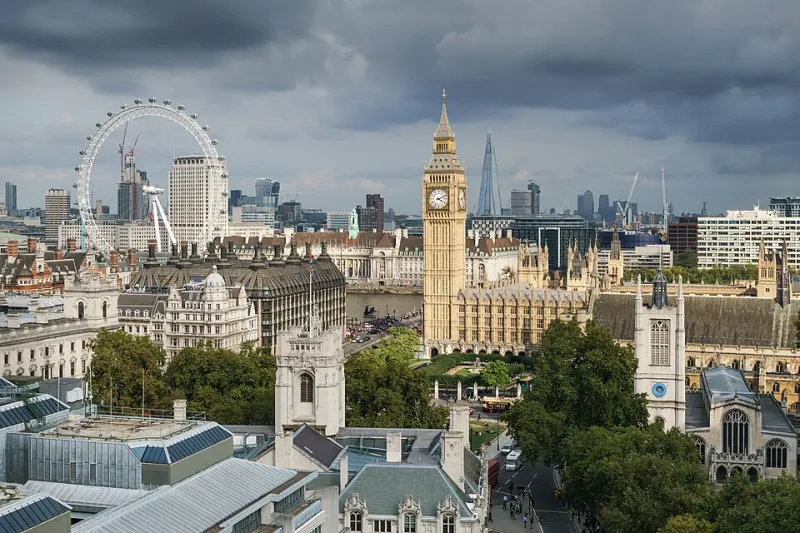
Photo: Colin, CC BY-SA 4.0, via Wikimedia Commons
Fiscal events have soundtracks. Some are symphonies, some are pub bands, and a few are tribute acts — a familiar chord progression played with conviction by people who were in primary school the first time it charted. The 2026 Autumn Statement landed somewhere in that third category. The lighting was different, the setlist had been reordered, and yet the chorus kept arriving at the same place: hard-working families, tough choices, no magic money tree.
None of that phrasing is new. It is the authorised version, passed down through the fiscal bloodline like a family recipe nobody has dared change since 2010.
The phrasebook has not been dusted since the coalition
Cast your mind back to the emergency Budget of June 2010, when George Osborne stood in the Commons and told the country that the age of irresponsibility was over. Within a fortnight the lexicon had settled: the cupboard was bare (courtesy of a note Liam Byrne now wishes had stayed in a drawer), the nation was maxing out its credit card, and the whole country was — inevitably, exhaustingly — all in it together.
Sixteen years later, half that vocabulary is back in circulation, with 'austerity' quietly retired to the wardrobe and 'consolidation' sent out in its place. You will not hear a minister in 2026 use the A-word in a fiscal statement unless it is to distance themselves from it, usually within a sentence that describes an identically shaped policy. The packaging has changed. The policy has not.
There is a practical reason for the laundering. 'Austerity' is a word that polls badly, tested to destruction over a decade, and no focus group has ever returned a card saying 'more of that, please'. 'Consolidation' sounds like a step in a sensible process, which is precisely the point. Words in Treasury land do not describe policy; they apologise for it.
What genuinely changed: the alibi
The real difference between 2010 and 2026 is not the language but the referee. In 2010, ministers could sell a spending review on the strength of their own conviction and a hostile press willing to entertain it. In 2026 the arithmetic arrives pre-audited by the fiscal watchdog, the rules are written in public, and every 'headroom' number is stress-tested live by people who own spreadsheets and do not have to be polite about it.
That has shifted the argument in a subtle way. Blame is no longer projected outward onto the previous government alone; it is diffused into the machinery. 'These are the rules' has replaced 'there is no alternative' as the sentence that ends debate. The effect is the same, though. Both phrases mean: do not ask for things.
The household metaphor is doing unpaid overtime
Then there is the analogy that simply will not die. The state as a household, the deficit as a credit card, the taxpayer as a parent confiscating pocket money. It survives because it is intuitive and because it quietly implies that government spending is consumption rather than infrastructure — a moral failing rather than a choice.
No household in Britain borrows to build a road that pays for itself over forty years, employs 80,000 people, or underwrites the mortgage market. Most do not run a university. The metaphor is not an explanation, it is a mood. And moods are cheaper to manage than budgets.
What the metaphor does let ministers do is frame every difficult choice as something done to people by circumstance, rather than by people with options. It is a grammatical trick as much as an economic one. Nobody ever gets blamed for the weather.
Where the ghost actually lives: the baseline
The spirit of 2010 does not haunt the speeches. It haunts the spending totals buried forty pages into the annexes, where the same technique returns: generous headline numbers for the years that will be someone else's problem, and 'efficiency savings' scheduled for the years that have already nearly happened. The fiscal target is met by a headroom figure so thin you could read a newspaper through it, and the press release calls it prudence.
Every government promises to fix the roof while the sun shines. Remarkably few mention that the roof was last fixed under a different roofer and the leak has since moved.
Why the old script keeps getting recommissioned
Because it works. Fiscal gravity signals seriousness, seriousness wins the news cycle, and the news cycle is shorter than the forecast horizon. Voters reward a chancellor who sounds like they have said no to something, even if the something turns out to be a capital project in a constituency nobody watched.
There is also the simple truth that the alternative is harder to say out loud. 'We are choosing to spend more on health and debt interest, which means less elsewhere, and here are the trade-offs' is honest, adult and electorally radioactive. The 2010 script exists because it converts a choice into a weather event.
So expect the cover versions to keep coming. New cast, new staging, same chord changes. The most revealing line in any fiscal statement is rarely the announcement — it is the phrase you have heard before, delivered with a straight face, in a building with worse wiring than the one it was written for.