Carry-On Politics: What the Red Box Reveals Before the Minister Opens It
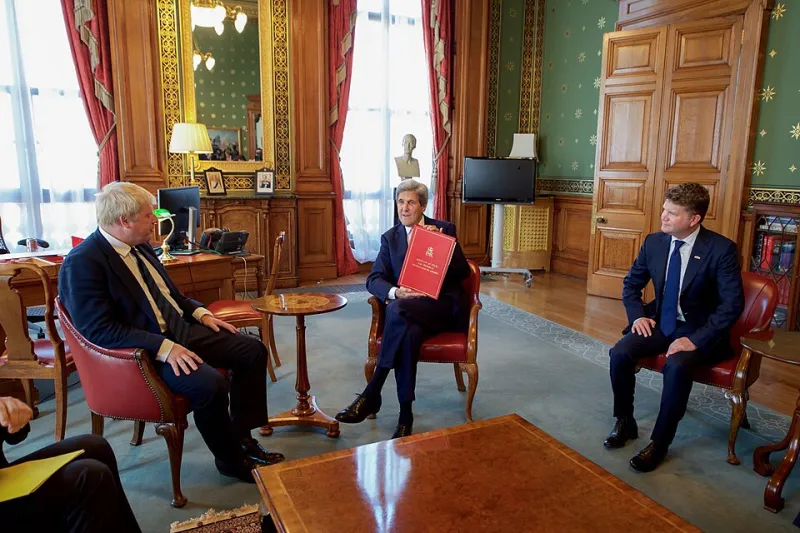
Photo: U.S. Department of State from United States, Public domain, via Wikimedia Commons
The red ministerial box has a straightforward job: carry papers from one building to another without letting them fall into a puddle. Everything else about it — the leather, the heft, the ritual photograph on the steps — is theatre. And like all good Westminster theatre, it is performed by people who insist they are not performing.
The prop that became a personality test
A red box is never just a red box. It is a statement about seriousness, stamina and the moral weight of whatever is inside it, even when the contents are a briefing on rail franchising and a banana. Ministers know the camera will find the box before it finds them. Private offices know it too. That is why the packing of the box has become a small ceremony of its own, conducted with the solemnity of a state visit and the urgency of a lost passport.
The box can signal many things. A minister carrying a full box at 7am looks diligent. A minister carrying an empty box at 7am looks like they have learned how to delegate. A minister photographed carrying a box while answering a question about the box looks like they have been advised by someone who once saw a photo of a prime minister doing the same thing. The copy is never quite the same, but the genre is unmistakable.
Packing the box: a private office love language
Ask a former private secretary what they remember about their minister and you will often get a story about the box. Not the policy, not the crisis, not the late-night redraft of a statement — the box. It is the place where the private office's relationship with the minister becomes physical. Someone has to decide what goes in, what stays out, what is marked urgent, what is marked urgent but is really just urgent to someone else, and what is quietly moved to the bottom in the hope that it will be dealt with after the next election.
The packing is not neutral. A box stuffed with submissions is a box that says: you are behind. A box with three carefully chosen folders and a copy of the minister's speech is a box that says: we have edited your life for you. A box containing a briefing on a subject the minister has forgotten they are passionate about is a box that says: we remember your conference speech better than you do. The private office is not just facilitating work; it is curating a version of the minister's day. The box is the gallery.
The 20-pace read
You do not need to open a red box to learn something from it. Stand 20 paces away, preferably near a lift, and observe.
- The grip. One hand on the handle, box swinging slightly: confidence, or a minister who has been told to look relaxed. Two hands, box hugged to the chest: either a major fiscal event or a minister who has been separated from their phone.
- The angle. Box held flat and level: a private office that has mastered the art of the visible folder. Box tilted towards the camera: a minister who understands that the box is the star and they are the supporting act.
- The pace. A brisk walk with the box suggests purpose. A slow walk with the box suggests a photo opportunity. A standing still with the box suggests the photographer has asked for one more.
- The entourage. A box carried by an adviser is not a red box in the traditional sense. It is a bag. A box carried by a civil servant is a sign that the minister has a bad back, a tight schedule, or both.
- The second box. Two boxes is not twice the work. It is a warning. Someone in the private office has overestimated the minister's upper-body strength and underestimated the lift queue.
When the box is actually full
There are moments when the box is not a prop. Budget day, a statement, a crisis that arrives before the briefing does — these are the days when the box earns its reputation. The minister looks at the contents with the expression of a person who has been handed a large bill in a restaurant where they thought someone else was paying. The private office hovers. The special adviser makes a joke about the weight of office. The box sits there, heavy and red and utterly indifferent to the constitution.
This is the box's best performance, because it is barely performing at all. It is just a bag of papers. The theatre falls away and what remains is the oldest story in Westminster: someone has to read the thing, decide the thing, and carry the consequence. The box is only the carrier.
The workout is the point
The red box has become a fitness test for ambition. It is not enough to do the job; you must be seen carrying the job. The box is the dumbbell in the political gym, and the photo is the rep. Ministers who understand this will hold the box slightly away from the body, as if it were a mild inconvenience rather than the entire contents of their working life. Ministers who do not understand this will be photographed holding it like a suitcase that contains a dead badger.
The irony is that the most revealing box is the one that looks least staged. A minister who carries the box without looking at the camera is either genuinely busy or very well advised. In Westminster, those two things are often the same. The box does not tell you what the minister is doing. It tells you how they want to be seen doing it. And in a town where the photo often outlives the policy, that is not nothing.