Shelf-Awareness: A Field Guide to the Ministerial Zoom Background

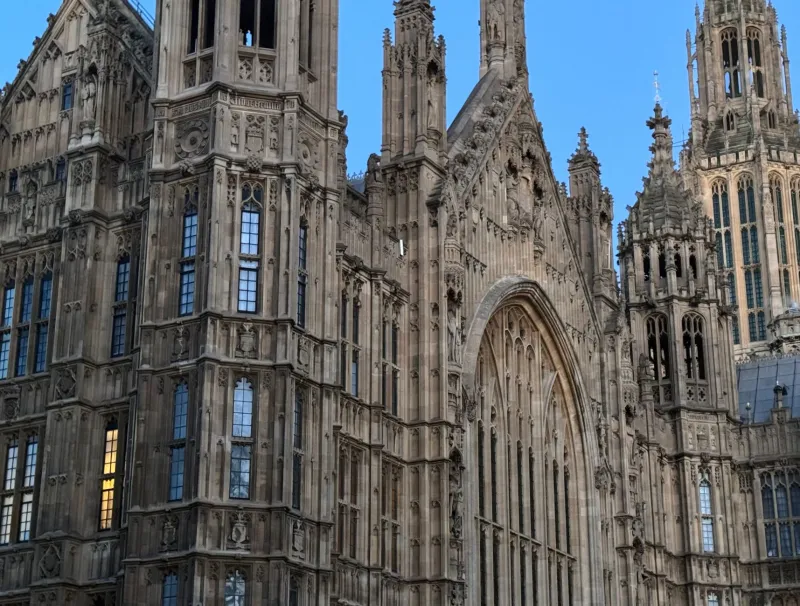
Photo: David John Earls/Typographer.org Typecub, CC BY-SA 3.0, via Wikimedia Commons
There was a time when a minister preparing for a broadcast worried about the tie. Now the tie is the least of it. The real work is behind the head: the bookshelf, the flag, the framed photograph angled just so, the red box placed at the exact intersection of authority and nostalgia. In 2026, the Zoom background is not a background. It is a press release with dust jackets.
Welcome to the era of shelf-awareness. The backdrop has become the most overworked comms tool in Westminster, and the most under-examined. So we have done the examining, with a scoring system that is entirely unscientific and only mildly unfair.
The Diaries Shelf Index: how we mark the backdrop
We are marking out of ten across four categories: Signals (what the object is meant to say), Plausibility (whether anyone believes it), Lighting (can we actually read the spines, or is this a mood board?), and Audacity (the sheer nerve of the staging). A perfect ten is a unicorn. Most ministerials land between four and seven, which is also true of most ministerial answers.
The Bagehot shelf: 6/10
A well-thumbed copy of Bagehot is the Westminster equivalent of a guitar in the corner of a dating profile. It says: I think about the constitution, but in a rugged way. The problem is provenance. If the spine is cracked in three places, fine. If the bookmark is a dry cleaner's receipt from 2026, we have questions. If it is pristine, it is not a book. It is a prop with a ISBN.
Extra marks for a neighbouring volume that is clearly not there for the cameras — a battered local history, a biography of a forgotten chancellor, a cookbook someone actually uses. Minus marks for a row of think-tank pamphlets arranged by colour. Nobody arranges pamphlets by colour except people who have never read a pamphlet.
The red box: 5/10, rising to 8/10 if it looks used
The red box is the workhorse of the genre. Placed on the desk behind the shoulder, it whispers: I am a minister, I have papers, I am dispatched. But the box has a tell. A genuinely used red box has a corner that has met a doorframe. It has a faint scuff. It looks like it has carried something with a security classification and a coffee stain.
A box so fresh it could still be in the shrink wrap is not a dispatch box. It is a display box. We are not fooled, and neither is the camera, which picks up the sheen at 1080p. The 2026 upgrade is the box with a single visible document poking out. This is the equivalent of a rolled-up sleeve: it says work is happening. It also says someone in the private office spent twenty minutes choosing which document.
The family photograph: 7/10, with a hard ceiling
The family photo is the oldest move in the book, and it still works, because it is the only object on the shelf that cannot be briefed against. But placement matters. A photo angled towards the camera is a message. A photo angled away is a rumour. The best ones are slightly obscured by a plant, which suggests a life lived rather than a set dressed.
Watch for the photo that has been updated. If the children in the frame are visibly younger than the children in the minister's actual life, the backdrop is doing the work of a time machine. This is not a crime. It is simply a reminder that the shelf is a curated archive, and archives are edited.
The flag: 4/10, or 9/10 if it is the right flag
The flag is the blunt instrument. It is the backdrop equivalent of saying 'strong leadership' three times in a press release. A Union flag folded neatly on a shelf is fine. A Union flag that appears to have been ironed by a special adviser at 6am is a cry for help. The 2026 twist is the regional variant: a subtle flag of a constituent nation, placed just behind the shoulder, doing a great deal of constitutional heavy lifting without saying a word.
The policy papers: 3/10, unless they are real
The stack of policy papers is the most transparently strategic object on the shelf. It says: I am across the detail. It usually says the opposite. The tell is the alignment. Real papers are a mess of corners, tabs and a laminated cover sheet from a meeting that overran. Staged papers are a perfect fan, like a spread of cards. Nobody's desk looks like that. Nobody's desk has ever looked like that. If the papers are fanned, someone has been fanned.
The plant: 8/10, the quiet overachiever
The plant is the most underrated item in the ministerial backdrop. It softens the frame, it signals humanity, and it gives the eye somewhere to rest when the answer goes long. A healthy plant suggests competence. A dying plant suggests honesty. A plastic plant suggests a comms team that has given up and is now phoning it in from a storage cupboard in Richmond.
What the shelf is really for
The bookshelf briefing is not about books. It is about pre-emption. Every object is an answer to a question the minister does not want to be asked. The biography says 'I have roots'. The red box says 'I am important'. The family photo says 'I am a person'. The plant says 'I am calm'. The fanned papers say 'please do not ask about the spending review'.
And yet, for all the staging, the shelf keeps betraying its owner. The book that is too clean. The box that is too new. The photo that is too old. The plant that is too plastic. The backdrop is the one part of the broadcast that cannot interrupt, cannot brief, and cannot be spun in the post-match. It just sits there, quietly telling the truth about how hard someone tried.
So next time a minister appears on screen, ignore the words for a moment. Look behind the head. Count the tells. Score the shelf. It is the most honest part of the interview, and it does not even know it.