Consensus Bingo: The Twelve Phrases Doing All the Work in Westminster Policy Reports
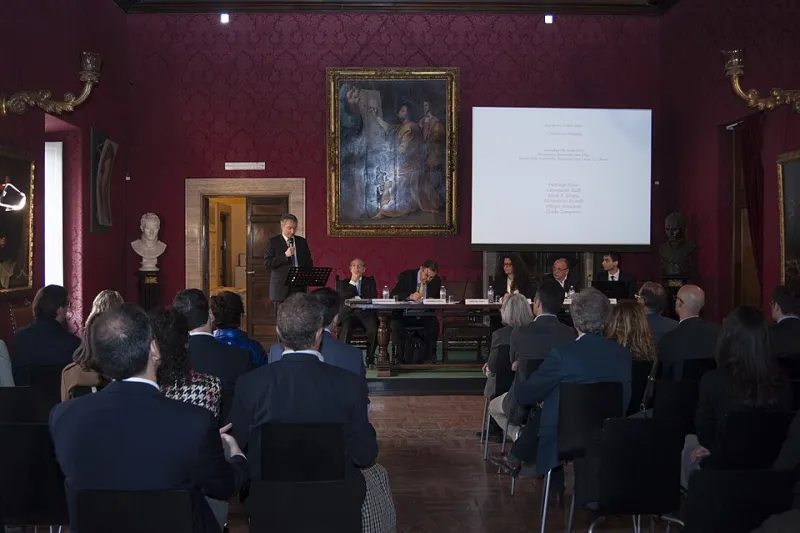
Photo: Spamp77, CC BY-SA 4.0, via Wikimedia Commons
There is a moment, about page 14 of any Westminster policy report, when the language stops describing the world and starts upholstering it. The evidence base has been assembled, the foreword has thanked three former ministers and a bishop, and then the phrases arrive like a tray of canapés. They are not lies. They are consensus in a suit.
Policy papers are not written so much as assembled from a shared kit. Think tanks borrow from SpAds, SpAds borrow from departments, departments borrow from consultants, and consultants borrow from each other. The result is a language that sounds decisive while committing to almost nothing. Here is the bingo card.
1. World-leading
Meaning: we have not checked what other countries do, but we would like to. The phrase is a mood, not a measurement. It appears whenever a minister needs to sound ambitious without naming a comparator. If a report says Britain will be 'world-leading' in something, ask which country is currently leading and why we are not simply copying them. The answer is usually that the comparison would be embarrassing.
2. Fiscal headroom
Meaning: the amount of money a chancellor can mention before the markets make a noise. It is the policy equivalent of saying you have 'some room' on a credit card. Fiscal headroom is not a sum of money; it is a forecast with a reputation for changing its mind. When a think tank says a policy is 'affordable within existing fiscal headroom', it means someone has found a number and is hoping nobody asks for the spreadsheet.
3. Delivery-focused
Meaning: we have replaced a strategy with a dashboard. Delivery is the word people use when they want to stop arguing about ends and start arguing about milestones. It sounds practical. It is often a way of avoiding the question of whether the policy is any good. A delivery-focused report will contain a timetable, a list of responsible bodies and no theory of change. That is not always a bad thing. It is just not the same as an idea.
4. Bold new settlement
Meaning: a deal so bold it has been focus-grouped twice and softened once. Settlements are what Westminster reaches for when it wants to sound historic without introducing a bill. They imply a new social contract, a new era, a new understanding. In practice, they usually mean a funding formula has been tweaked and everyone has agreed to call it a settlement.
5. Evidence-based
Meaning: we have commissioned a literature review from a friend. Evidence-based policy is a fine ambition, but the phrase has become a way of laundering preferences. The evidence is often selective, the review is often internal and the conclusion is often the one the funder wanted. The real question is not 'is this evidence-based?' but 'which evidence, chosen by whom, and what would count as disproof?'
6. Long-term plan
Meaning: a plan longer than the political cycle, which is why nobody will be blamed for it. Long-termism is the safest kind of ambition. It allows a minister to promise something for 2035 while knowing that the next election will arrive first. A genuine long-term plan has interim milestones and a mechanism for being held to them. A rhetorical one has a foreword and a horizon.
7. Mission-led
Meaning: the department has a new logo and the same budget. Missions are useful because they sound less bureaucratic than strategies and less ideological than targets. They are also vague enough to survive contact with the Treasury. When every department has a mission, the word stops distinguishing anything. It becomes wallpaper.
8. Pro-innovation
Meaning: we support things we do not understand, as long as they are not in our constituency. Innovation is the policy version of a standing ovation. Nobody is against it. The difficulty is that innovation often requires disruption, and disruption has a habit of upsetting the people who write to their MP. A pro-innovation report will usually recommend a sandbox, a review and a minister for the future.
9. Stakeholder engagement
Meaning: we have listened to the people we already agree with. Engagement is essential to good policy, but the phrase often hides a narrow consultation. The question is who was in the room, who was not, and whether anyone was allowed to say no. If a report says it has engaged widely, look for the list of consultees. If there is no list, assume the usual suspects.
10. Growth-enhancing
Meaning: this policy is good; please do not ask for the multiplier. Growth is the universal solvent of Westminster. Every policy is now growth-enhancing, from childcare to planning reform to a new train line that will not open until 2041. The phrase is not useless, but it is doing too much work. Ask for the mechanism. Ask for the timescale. Ask why the growth did not arrive last time.
11. Fiscal event
Meaning: a Budget that has been told off by the Office for Budget Responsibility. 'Fiscal event' is what happens when a government wants the drama of a Budget without the scrutiny of a full fiscal statement. It is a phrase designed to lower expectations while raising the temperature. If you see it in a think tank report, read the next paragraph twice.
12. Radical
Meaning: we have changed a footnote and called it a reform. Radical is the most overworked word in the policy dictionary. It can mean anything from abolishing a quango to renaming a quango. The test is simple: would anyone notice? If the answer is no, the radicalism is in the language, not the policy.
How to Spot an Actual Idea
The genuine idea is usually the sentence that would annoy someone. It has a number, a date and a named person responsible. It says who loses, not just who gains. It survives being read aloud without the adjectives. If a report contains three adjectives and no verb, it is a press release with a bibliography. If it contains a specific proposal that a minister would rather not defend on the Today programme, it might be worth reading.
None of this is to say that think tanks are useless. They do valuable work, often underpaid and under-read. But the language of consensus is a survival mechanism. It allows reports to be launched, briefed and filed without ever quite committing to a fight. The reader's job is to look past the bingo card and find the one line that would not have been written by a committee. That line is usually near the back, slightly awkward, and much more interesting than the foreword.