The Corner Banquette Index: How to Read a Westminster Career Over Lunch
In Westminster, lunch is not a break from politics. It is politics with a napkin. Anyone can read a lobby register; the real ledger is in the reservation book. Where you sit, when you booked, who reaches for the card and which restaurant gets name-checked in a briefing are all part of the same status decoder. The food is almost incidental. Almost.
The 12:15 By the Door
A 12:15 booking is never casual. It means someone has questions at 2:30, a train to catch or a minister who still believes the day can be controlled. The table by the door is the human equivalent of a press notice: visible, draughty and likely to be moved by the end of the month. If your host keeps glancing at the entrance, you are not the main event. You are the warm-up act.
The 12:15 by the window is different. That is a minister who wants to be seen having lunch without being seen having a difficult lunch. The window table says transparency. The corner banquette says something else entirely.
The Corner Banquette
The corner banquette is the last true luxury of a minister still on the way up. You can see the room; the room cannot see you. A SpAd who books it has either learned the trade or is about to be told they have been promoted to a job with no staff. The banquette is where deals are agreed in the passive voice: 'It was felt that the timing might be wrong.' Nobody at a corner table ever says anything directly. That is the point.
A central table, by contrast, is the vanity of a new adviser who has not yet learned that power whispers from the edges. The middle of the room is for people who want to be recognised by the waiter, not by the Whip's Office.
The Booking-Time Tell
Booking three weeks ahead is courtship. You are being handled with care, which means someone wants something and has been told to be patient. Booking yesterday is management. Booking this morning is damage limitation. A walk-in is either a genuine titan who no longer needs a diary or someone about to be reshuffled out of their office by Friday. Check whether their phone is face down. If it is, they already know.
The 1pm booking is the most honest of all. It says: I have had a morning of meetings that could have been emails, and I am now having a lunch that could have been a phone call. Westminster runs on this kind of efficiency.
Who Picks Up the Bill
The bill is a miniature coalition agreement. A corporate card produced without a flicker means consultancy, lobbying or a think tank with a generous chairman. A personal card means either a leadership bid or guilt. A split bill means a coalition that will not survive the next reshuffle. And if the bill is settled with a quiet word and no card at all, you are lunching with a special adviser who has mastered the dark art of the invisible expense claim.
The truly senior move is not paying. It is letting someone else pay and then thanking them in a way that makes clear the favour runs the other way. 'We must do this again' is not an invitation. It is a performance review.
The Name-Drop Test
Restaurant names appear in lobby briefings like weather reports. 'He was at Scott's' is not a food review; it is a character reference. 'They were seen at The Wolseley' means the relationship is serious enough to be photographed and casual enough to be denied. 'A quiet table at Rules' means the conversation was about inheritance tax or the succession, possibly both.
The restaurant does not need to be fashionable. It needs to be legible. A backbench MP who lunches at the same place every week is building a brand. A minister who is never seen anywhere is either disciplined or in trouble. A minister who is seen everywhere is about to be the subject of a profile that begins with the word 'energetic' and ends with the word 'restless'.
A Practical Decoder
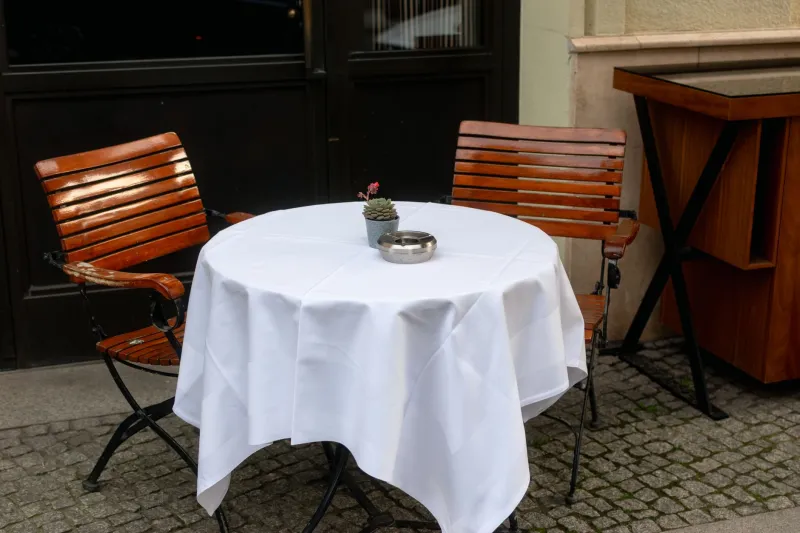
So here is the guide. If the table is by the door and the bill is split, you are in the company of someone who is still building. If the table is in the corner and the bill disappears, you are in the company of someone who has already built. If the table is outside and the weather is being discussed, you are in opposition. If the table is upstairs and the menu is not, you are at a select committee chair's lunch, where the real agenda is the next inquiry.
The White House Diaries does not recommend ordering the most expensive thing on the menu unless you are the one paying. It does recommend watching who arrives late and who leaves first. In Westminster, the person who leaves first is either very important or very worried. The person who arrives late is either a minister or a ghost. Either way, the table has already told you the story.